
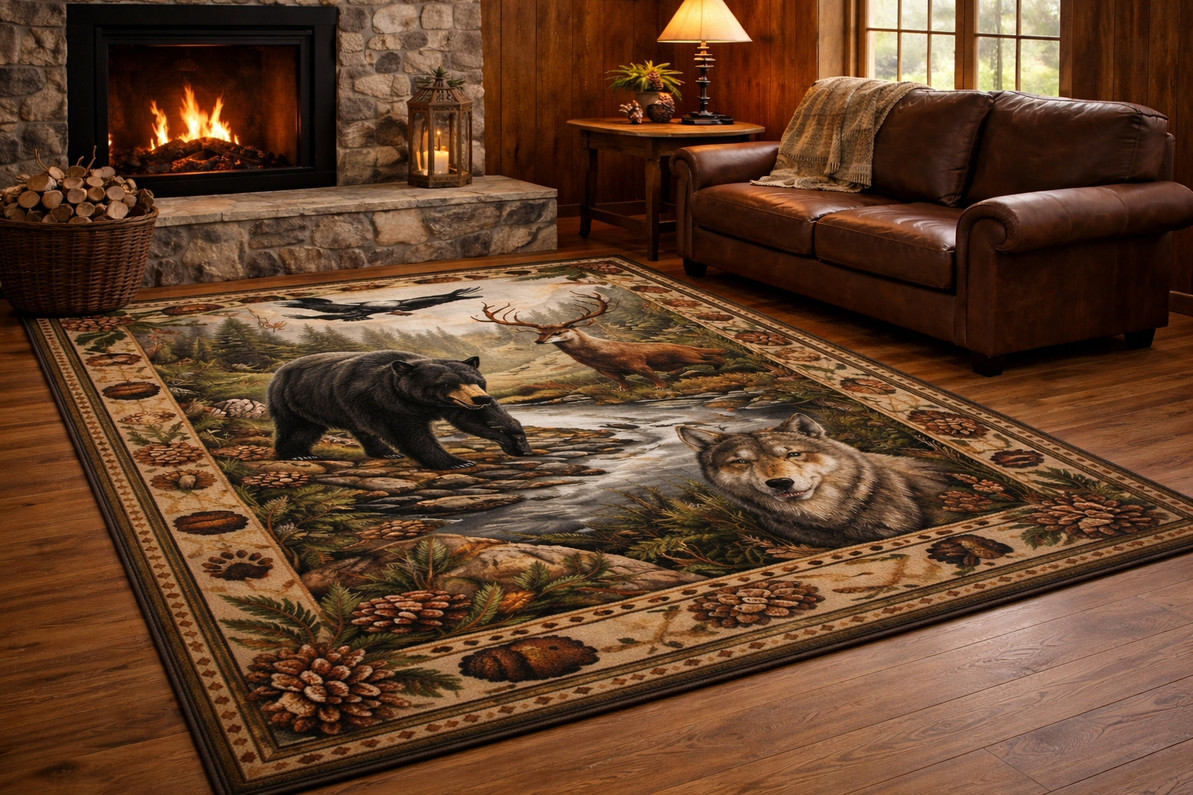
Wildlife Rugs - Rustic Cabin, Lodge & Nature Inspired Decor
Wildlife Rugs: Bring the Beauty of Nature to Your Floors
There is something timeless about wildlife inspired decor. From majestic deer and elk to powerful bears, soaring eagles, and quiet forest scenes, wildlife themes connect your home to the outdoors in a meaningful way. While wall art and accents often get the spotlight, one of the most transformative pieces you can add to a space is a wildlife rug.
A well chosen wildlife rug does more than cover the floor. It anchors your furniture, softens the room, adds warmth underfoot, and instantly sets the tone for a nature inspired interior. Whether you are decorating a cabin, lodge, farmhouse, lake house, or simply want to bring rustic character into a modern home, wildlife rugs offer depth, texture, and personality in one functional piece.
If you are ready to explore a wide range of designs, browse JataShop's Wildlife Rug Collection and discover styles that bring the outdoors inside.
Why Wildlife Rugs Make Such a Strong Design Statement
Rugs naturally command attention because they occupy large visual space. When that space features wildlife imagery, it becomes a focal point that defines the entire room. Unlike small decor items, a wildlife rug can shape the color palette, influence furniture choices, and unify other rustic elements.
1. Instant Warmth and Texture
Wildlife rugs often feature earthy tones like browns, forest greens, warm neutrals, deep reds, and muted blues. These colors create a grounded atmosphere and pair beautifully with wood furniture, stone fireplaces, leather seating, and natural textiles.
2. A Clear Theme Anchor
If your goal is to create a cohesive wildlife or lodge inspired space, the rug becomes your anchor piece. You can build around it with coordinating wall art, throw pillows, and metal accents featuring the same animals or natural scenery.
3. Comfort and Practicality
Beyond style, rugs soften hard floors, reduce noise, and add comfort underfoot. In colder climates, wildlife rugs add insulation and warmth, especially in cabins and mountain homes.
Popular Wildlife Rug Themes
Wildlife rugs come in a wide range of themes, allowing homeowners to choose designs that reflect their favorite animals or landscapes.
Deer and Elk Rugs
Perfect for cabins and woodland homes, deer and elk rugs often feature forest backdrops, antler silhouettes, or repeating lodge patterns. These rugs pair beautifully with reclaimed wood furniture and plaid textiles.
Bear and Moose Rugs
Bear and moose designs add bold rustic presence. They work well in living rooms with stone fireplaces, leather couches, and heavy timber beams.
Lake and Cabin Scenes
Some wildlife rugs feature scenic artwork such as mountain ranges, pine forests, or lakes at sunset. These designs bring peaceful outdoor imagery directly into the room.
Southwest Wildlife Motifs
For homes blending wildlife and Southwest influences, rugs may include bison, desert animals, or geometric tribal borders combined with animal silhouettes.
Fishing and Outdoor Themes
Trout, ducks, pinecones, and camping scenes are popular for lake houses and vacation homes. These rugs add personality to entryways and mudrooms.
Choosing the Right Wildlife Rug Size
Size plays a critical role in how your wildlife rug looks and functions within a space. A beautifully designed rug can lose its impact if it is too small or overpower the room if it is too large. Always measure your space carefully and consider how furniture will interact with the rug before making a decision.
Living Rooms
In living rooms, a wildlife rug should anchor the seating area rather than float in the middle of the space. Ideally, choose a rug large enough so that the front legs of sofas and chairs rest comfortably on it. In larger rooms, you may opt for a rug that fits entirely beneath all seating furniture to create a cohesive, grounded look. This helps visually connect sofas, accent chairs, and coffee tables while allowing the wildlife imagery to become a strong focal point.
Bedrooms
In bedrooms, wildlife rugs can be used to soften the space and add warmth underfoot. A common approach is placing a large rug under the bed, extending 18 to 24 inches beyond each side and the foot of the bed. This provides balance and comfort when stepping out of bed. Alternatively, smaller accent rugs can be positioned along each side for a more subtle wildlife touch. Choose designs that feel calming, such as forest scenes or softer deer silhouettes, to maintain a restful atmosphere.
Dining Rooms
For dining areas, the rug should extend well beyond the table’s edges so that chairs remain fully on the rug when pulled out. This prevents awkward tipping and protects floors from scratches. Wildlife rugs with darker tones or detailed borders often perform well in dining spaces because they help conceal minor spills while adding rustic personality to the room.
Entryways and Hallways
Entryways and hallways benefit from runner style wildlife rugs that guide the eye and protect high traffic areas. Choose a rug that leaves a few inches of visible floor along the edges for proper framing. Durable materials are especially important here since these areas experience frequent foot traffic. Wildlife motifs such as moose, bear tracks, pinecones, or cabin inspired patterns work beautifully in transitional spaces.
Bathrooms
In bathrooms, smaller wildlife rugs or accent mats work best. Choose sizes that fit comfortably in front of vanities, sinks, or bathtubs without crowding the space. Wildlife themed bath rugs featuring bears, moose, deer, or lake scenes can add rustic charm while keeping floors warm and slip resistant. In larger bathrooms, consider a runner style rug to add softness and visual continuity while maintaining functionality.
Materials and Construction
Wildlife rugs are available in various materials depending on the look, feel, and level of durability you need. The right material choice can make a difference in comfort, maintenance, and how well the rug performs in everyday spaces.
Polypropylene and Synthetic Fibers
These materials are highly durable, stain resistant, and ideal for high traffic areas like living rooms, hallways, and entryways. Synthetic fibers are designed to resist moisture and fading, helping wildlife patterns stay vibrant over time. They are easy to clean and maintain with routine vacuuming and occasional spot treatment, making them a practical option for households with pets or children.
Wool Rugs
Wool offers natural softness, insulation, and long lasting performance. Its fibers are resilient and help the rug maintain its shape even with regular use. Wool also provides a naturally warm and cozy feel underfoot, making it an excellent choice for cabin interiors, lodge style homes, or comfortable bedroom settings.
Natural Fiber Blends
Some wildlife rugs incorporate natural textures such as cotton or blended fibers for added rustic character. These blends balance durability with visual warmth and can enhance the organic, outdoors inspired look that wildlife decor is known for. They often provide a softer hand feel while still maintaining dependable structure for everyday living.
Design Tips for Decorating with Wildlife Rugs
A wildlife rug can completely transform a room, but thoughtful placement and styling make all the difference. Because wildlife designs often feature bold imagery, strong color palettes, and detailed patterns, it is important to integrate them intentionally within your overall decor scheme.
Balance Bold Patterns
If your wildlife rug features detailed animal imagery, scenic landscapes, or high contrast patterns, allow it to be the visual centerpiece of the room. Surround it with more neutral furniture and textiles to prevent visual overload. Solid color sofas, simple curtains, and understated throw pillows help the rug stand out without competing for attention. This creates harmony and keeps the space feeling curated rather than cluttered.
Repeat the Theme Subtly
For a cohesive look, echo small elements of the rug’s theme throughout the room. For example, if your rug features deer silhouettes, consider incorporating subtle deer motifs in wall art, accent pillows, or metal decor. The key is repetition without duplication. You do not need to match everything exactly, but small coordinated details help tie the space together and reinforce the wildlife aesthetic.
Layer for Depth and Dimension
Layering rugs can add sophistication and depth to larger spaces. Try placing a smaller wildlife rug over a larger neutral base rug made of jute or a subtle woven pattern. This technique frames the wildlife design and makes it feel intentional. Layering also works well in open floor plans where you want to define specific seating or conversation areas.
Consider Color Temperature and Lighting
Wildlife rugs often feature warm, earthy tones that shine under soft, warm lighting. Use warm bulbs and natural light to enhance browns, reds, and forest greens. If the rug includes cooler tones like deep blues or mountain grays, balance them with natural wood finishes or warm metal accents to maintain visual warmth.
Use Furniture Placement Strategically
Position furniture so that the main imagery on the rug remains visible. Avoid covering key design elements like central animals or scenic focal points with heavy coffee tables or oversized ottomans. Transparent or open frame furniture can help showcase more of the artwork beneath.
Create Visual Flow in Open Spaces
In open concept homes, wildlife rugs can help define zones such as living, dining, or reading areas. Choose rugs that complement each other if you are using multiple pieces in one space. For example, a bold bear motif in the living room could be paired with a more subtle pinecone or forest pattern in an adjacent dining area to maintain continuity without repetition.
Match the Rug to the Room’s Function
In high traffic areas, choose durable materials and patterns that disguise everyday wear. In low traffic spaces like bedrooms or reading nooks, you can select softer materials or more detailed scenic designs. Always balance beauty with practicality so your wildlife rug enhances both the appearance and functionality of the room.
Wildlife Rugs for Different Interior Styles
One of the biggest advantages of wildlife rugs is their versatility. While they are often associated with cabins and lodges, the right wildlife design can complement a wide range of interior styles. The key is choosing patterns, colors, and scale that align with your home’s overall aesthetic.
Rustic Lodge
Rustic lodge interiors are the natural home for wildlife rugs. These spaces often feature exposed wood beams, stone fireplaces, leather seating, iron fixtures, and heavy timber furniture. In this setting, bold wildlife rugs featuring bears, moose, elk, or scenic forest landscapes feel authentic and intentional. Choose rich, earthy color palettes with deep browns, forest greens, and warm reds to reinforce the cozy, mountain retreat atmosphere. Larger rugs with strong central imagery work especially well in great rooms and gathering areas.
Farmhouse
Farmhouse interiors benefit from softer wildlife prints in muted tones. Instead of dramatic scenic artwork, consider rugs that feature subtle deer silhouettes, pinecones, or repeating woodland patterns. Neutral backgrounds with warm beige, cream, or light gray tones help the rug blend seamlessly with shiplap walls, distressed wood furniture, and simple decor. Wildlife rugs in farmhouse settings should enhance the space quietly rather than dominate it.
Modern Rustic
Modern rustic homes combine clean lines with natural materials. In this style, wildlife rugs add warmth and organic character without overwhelming the room. Choose designs with simplified animal silhouettes, geometric wildlife borders, or minimal scenic detail. Pair the rug with streamlined furniture, neutral walls, and metal accents for a balanced look. This approach keeps the space feeling contemporary while still celebrating nature inspired decor.
Cabin or Lake House
Cabins and lake houses are perfect environments for wildlife rugs that reflect the surrounding landscape. Scenic mountain ranges, pine forests, bears, deer, trout, or waterfowl designs help blur the line between indoors and outdoors. Choose durable materials that can handle higher foot traffic and occasional moisture from lake life. In these settings, wildlife rugs often serve as conversation pieces that reinforce the home’s connection to nature.
Southwest Inspired Homes
In homes that blend wildlife with Southwest decor, look for rugs that combine animal imagery with geometric patterns or tribal style borders. Bison silhouettes, desert wildlife, and warm terracotta tones pair beautifully with adobe walls, turquoise accents, and textured textiles. This creates a layered, culturally rich space that feels grounded and vibrant at the same time.
Transitional or Contemporary Spaces
Even contemporary interiors can benefit from wildlife rugs when chosen thoughtfully. Opt for abstract interpretations of animals, tone on tone designs, or subdued color palettes. Pair the rug with neutral furniture and simple decor to let it add texture and subtle visual interest without disrupting the modern aesthetic. Wildlife elements in these spaces should feel curated and intentional rather than thematic.
No matter your interior style, wildlife rugs can serve as foundational pieces that connect your home to nature. By selecting the right scale, pattern, and color palette, you can create a space that feels cohesive, welcoming, and inspired by the outdoors.
Caring for Your Wildlife Rug
- Vacuum regularly to prevent dirt buildup.
- Rotate periodically to ensure even wear.
- Use rug pads to extend lifespan and prevent slipping.
- Spot clean spills immediately.
- Follow manufacturer care instructions for deep cleaning.
Why Wildlife Rugs Are a Timeless Investment
Wildlife decor never feels trendy or fleeting. It represents a deep appreciation for nature and craftsmanship. A quality wildlife rug can serve as a foundational piece in your home for years, adapting as you refresh other elements around it.
Whether you prefer bold bear motifs, subtle deer silhouettes, or scenic mountain landscapes, wildlife rugs offer a powerful way to bring the outdoors inside.
Explore the full selection today at View all Wildlife Rug Styles and find the perfect piece to anchor your space.
FAQ: Wildlife Rugs for Rustic and Nature Inspired Homes
What are wildlife rugs?
Wildlife rugs are area rugs featuring animals, forest scenes, mountain landscapes, or outdoor themes. They are commonly used in cabins, lodge style homes, farmhouses, and rustic interiors.
What rooms are best for wildlife rugs?
Wildlife rugs work well in living rooms, bedrooms, dining rooms, entryways, cabins, and lake houses. They can serve as focal points or subtle accent pieces.
Are wildlife rugs durable for high traffic areas?
Many wildlife rugs are made from durable synthetic fibers designed for high traffic use. Always check material details and use a rug pad for added protection.
How do I choose the right size wildlife rug?
Choose a size that anchors your furniture. In living rooms, the rug should fit under the front legs of seating. In dining rooms, ensure chairs stay on the rug when pulled out.
How do I clean and maintain a wildlife rug?
Vacuum regularly, spot clean spills promptly, rotate periodically, and follow manufacturer instructions for deeper cleaning.
Can wildlife rugs work in modern homes?
Yes. Wildlife rugs can add warmth and contrast to modern interiors when paired with clean lines and neutral furnishings.
Where can I shop wildlife rugs online?
You can browse a wide variety of Wildlife Area Rugs at JataShop.
Recent Posts
-

Wall Signs Ideas for Rustic, Vintage & Themed Home Decor
Wall Signs: Rustic, Vintage, and Decorative Wall Signs That Add Character to Every Room Wall signs …Mar 27th 2026 -
Southwest Decor That Brings Warmth and Desert Style Into Your Home
Southwest Decor Ideas for Warm, Textured, and Desert-Inspired Interiors Southwest decor brings toge …Mar 21st 2026 -
Western Rugs Inspired by the Spirit of the Old West
Western Rugs: Rugged Charm, Ranch Spirit, and Timeless Style for Your Home The American West has al …Feb 16th 2026