
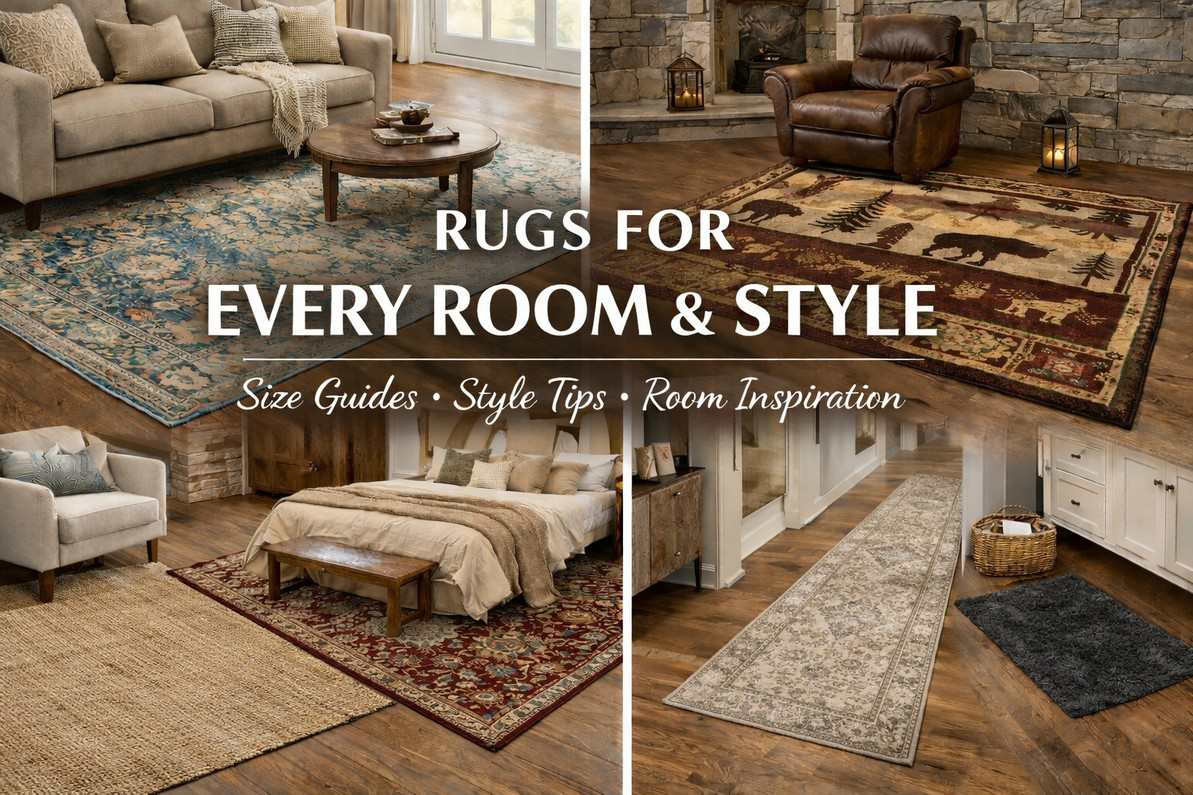
Area Rugs for Every Room | Sizes, Styles and Design Tips
Area Rugs for Every Style, Space, and Room in Your Home
Area rugs are one of the most powerful design elements in any home. They define spaces, anchor furniture, add warmth, introduce texture, and bring color and personality to a room. Whether your style leans modern, traditional, farmhouse, lodge, Western, Southwest, wildlife inspired, sports themed, or classic transitional, the right rug becomes the foundation that ties everything together.
A thoughtfully chosen rug transforms flooring into a design feature. It softens hardwood and tile, absorbs sound, protects surfaces, and creates intentional structure within open layouts. From living rooms and bedrooms to dining areas, home offices, and hallways, rugs help shape the way a space looks and feels.
Explore the full rug collection here: Shop All Rugs at JataShop
Why Rugs Matter in Interior Design
Without a rug, furniture can appear disconnected and a room may feel unfinished. Rugs visually anchor seating areas, create natural borders, and establish a sense of proportion. They also allow you to introduce pattern and color without repainting walls or replacing major furniture pieces.
Well placed rugs provide:
- Comfort and warmth underfoot
- Visual structure in open concept spaces
- Color coordination that connects decor elements
- Acoustic softness in large rooms
- Protection for high traffic flooring areas
Because rugs influence both comfort and aesthetics, they often serve as the starting point for decorating an entire room.
Choosing the Right Rug Size for Every Room
Size plays a critical role in how a rug functions within a space. At JataShop, rugs are organized by size categories, making it easy to shop based on your room dimensions and layout needs.
Here is how to think about sizing by room type:
Living Rooms
- Select a rug large enough for at least the front legs of sofas and chairs to rest comfortably on it
- In larger living rooms, choose a rug that fits all main seating pieces fully on the rug for a cohesive layout
- Allow 12 to 18 inches of visible flooring around the perimeter in most spaces for balanced proportion
- In open concept layouts, use a generously sized rug to clearly define the conversation area
- A rug that is too small can make the room feel disconnected and visually crowded
- Consider pattern scale carefully so it complements the size of the furniture and room
Dining Rooms
- Choose a rug that extends at least 24 inches beyond the dining table on all sides
- Ensure chairs remain completely on the rug even when pulled out for seating
- Select a rug shape that mirrors the table shape for visual harmony
- A properly sized rug prevents chairs from catching on the edge during use
- In larger dining spaces, a wider rug creates a more dramatic and anchored look
- Balance bold rug patterns with simpler table and chair designs to avoid visual clutter
Bedrooms
- Place a large rug under the lower two thirds of the bed to create balance
- Extend the rug beyond both sides of the bed to provide comfort when stepping out
- For king and queen beds, larger rugs create a luxurious and grounded appearance
- In smaller bedrooms, use runners on each side to add softness without overwhelming the space
- Ensure nightstands either sit fully on or fully off the rug for a clean look
- Choose softer tones in bedrooms to promote relaxation and comfort
Bathrooms
- Select smaller accent rugs or runners that fit proportionally within the available floor space
- Place rugs in front of vanities to add comfort and warmth
- Ensure rugs do not interfere with door swings or cabinetry
- Use coordinated styles that match the overall decor theme of the home
- In larger bathrooms, a runner between dual vanities can create symmetry and softness
- Choose durable materials suitable for moisture exposure
Hallways and Entryways
- Use runner rugs to guide foot traffic naturally through the space
- Allow consistent spacing between the rug edges and walls for a clean border
- Choose patterns that add interest without overwhelming narrow areas
- Select durable options designed for higher traffic flow
- Longer runners create visual continuity between adjoining rooms
- Consider darker tones or patterned styles to help conceal everyday wear
When sized correctly, rugs enhance both comfort and visual proportion while helping each room feel intentionally designed.
Rugs for Every Interior Style
While many homeowners associate rugs with rustic or themed interiors, today’s rug collections span virtually every design aesthetic. The key is selecting patterns and colors that align with your overall decor.
Modern and Contemporary Rugs
Clean lines, abstract patterns, and neutral color palettes work beautifully in modern interiors. These rugs often feature subtle movement and minimal detailing that complements sleek furniture and open spaces.
Traditional and Classic Rugs
Traditional rugs offer timeless appeal with detailed patterns and balanced color schemes. They add refinement and sophistication to living rooms, dining spaces, and formal areas.
Farmhouse and Rustic Rugs
Farmhouse rugs emphasize warmth and comfort. Neutral tones, subtle distressing, and soft patterns help create inviting interiors that feel relaxed and welcoming.
Wildlife Rugs
Wildlife rugs feature animals such as deer, moose, bears, elk, and nature scenes that bring outdoor charm into cabins, lodges, and country homes.
Explore wildlife themed options here: Shop Wildlife Rugs
Western Rugs
Western rugs capture ranch inspired design and the spirit of the Old West. Geometric patterns, desert tones, and bold accents define this style.
Browse Western styles here: Shop Western Rugs
Southwest Rugs
Southwest rugs introduce layered geometric designs and warm earthy color combinations that add energy and movement to a space.
Explore Southwest styles here: Shop Southwest Rugs
In addition to these themes, rugs are available in a wide range of patterns and color schemes suitable for sports fans, nature lovers, farmhouse enthusiasts, and those who prefer clean modern aesthetics.
Using Rugs to Connect and Balance a Room
Rugs are not just decorative accessories. They influence how furniture interacts and how the eye moves through a space. A bold patterned rug can serve as a focal point, while a neutral rug allows other elements to stand out.
When selecting a rug, consider:
- Dominant colors in your walls and furniture
- The scale of the pattern relative to room size
- The level of contrast you want to introduce
- The amount of foot traffic the area receives
Layering rugs can also enhance dimension. Placing a patterned rug over a larger neutral base adds depth and texture while helping define seating areas within larger rooms.
Rugs for High Traffic Areas
Entryways, hallways, and family rooms require rugs that balance style with durability. Choosing patterns that disguise wear and colors that complement surrounding decor helps maintain a polished look over time.
Runner rugs in hallways provide both protection and style, guiding guests naturally from one room to another while reinforcing your home’s overall design theme.
Explore the Full Rug Collection at JataShop
No matter your interior style, rugs provide the finishing layer that makes a room feel complete. From bold statement pieces to subtle neutral foundations, the right rug elevates comfort, enhances layout, and reinforces your design vision.
Discover styles and sizes for every room here: Explore All Rugs at JataShop
With a wide range of themes, patterns, and size options, JataShop makes it easy to find the perfect rug for living rooms, dining spaces, bedrooms, bathrooms, hallways, entryways, and beyond.
Rug FAQ
How do I choose the perfect rug size for my living room?
Choose a rug large enough for at least the front legs of your sofa and chairs to rest on it. In larger rooms, placing all seating fully on the rug creates a polished, designer look and helps the room feel complete.
What size rug works best under a dining table?
Select a rug that extends at least 24 inches beyond the table on all sides. This ensures chairs stay on the rug when pulled out and keeps the dining space balanced and functional.
How should I place a rug in a bedroom?
Position a rug under the lower two thirds of the bed so it extends beyond both sides. This adds comfort when stepping out of bed and visually anchors the entire room.
Are runner rugs good for hallways and entryways?
Yes. Runner rugs are ideal for guiding foot traffic and protecting high traffic flooring. They also introduce style and warmth in transitional spaces.
Can rugs be used in bathrooms?
Smaller accent rugs or runners work beautifully in bathrooms. Place them in front of vanities for added comfort and choose durable materials suited for moisture exposure.
How do I choose a rug that matches my decor style?
Start with your room’s color palette and mood. Modern rooms pair well with clean patterns and neutrals, while traditional, wildlife, Western, and Southwest styles add character through rich tones and themed designs.
Should all of my furniture sit on the rug?
In larger spaces, placing all main furniture pieces on the rug creates a cohesive look. In smaller rooms, placing only the front legs on the rug can still anchor the space effectively.
What type of rug is best for high traffic areas?
Choose durable rugs with patterns that help conceal everyday wear. Runners and tightly woven styles are excellent choices for hallways, entryways, and family rooms.
Can layering rugs improve my design?
Yes. Layering a patterned rug over a larger neutral base adds depth and visual interest while clearly defining seating areas in open layouts.
How much floor should show around a rug?
Leaving 12 to 18 inches of visible flooring around the edges typically creates balanced proportions. Adjust slightly for smaller or larger rooms.
What rug shape should I choose?
Rectangle rugs work in most living rooms and bedrooms, while runners are perfect for narrow spaces. Choose a shape that mirrors your furniture layout for a cohesive design.
Can the right rug make a room feel larger?
Yes. A properly sized rug visually expands a room by clearly defining the space. Choosing a rug that is too small can make the room feel disconnected and cramped.
Recent Posts
-

Wall Signs Ideas for Rustic, Vintage & Themed Home Decor
Wall Signs: Rustic, Vintage, and Decorative Wall Signs That Add Character to Every Room Wall signs …Mar 27th 2026 -

Southwest Decor That Brings Warmth and Desert Style Into Your Home
Southwest Decor Ideas for Warm, Textured, and Desert-Inspired Interiors Southwest decor brings toge …Mar 21st 2026 -
Western Rugs Inspired by the Spirit of the Old West
Western Rugs: Rugged Charm, Ranch Spirit, and Timeless Style for Your Home The American West has al …Feb 16th 2026